
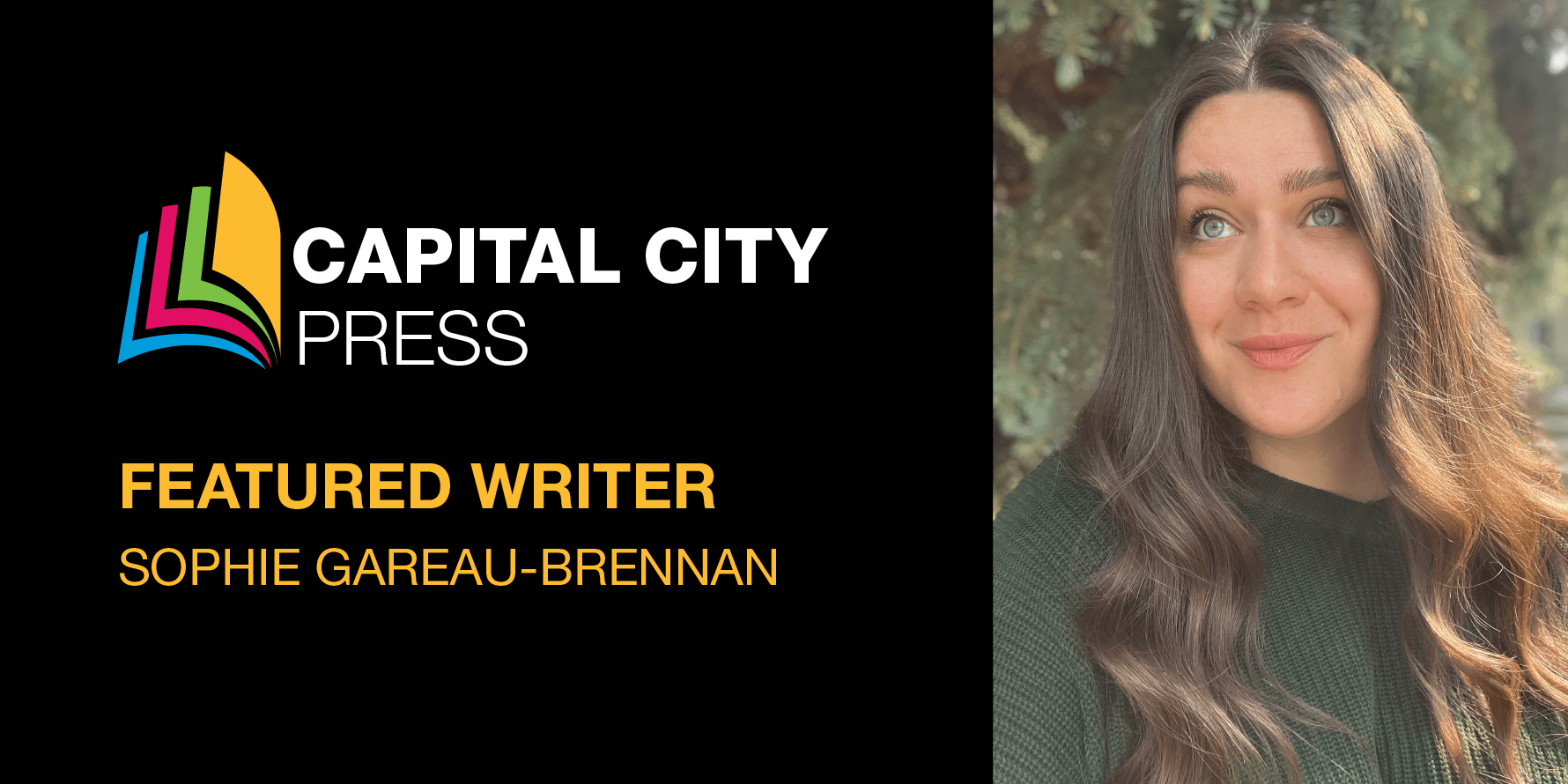
I think you should make art with friends.
Well.
I can’t tell you what to do.
But I do think you should make art with friends, or family, or really, anyone.

Some of my first real memories are playing with my sisters. Our favourite games weren’t really games. We wrote plays and rehearsed them on a makeshift stage in our basement. We painted and drew and made sculptures in my father’s studio and then transformed our living room into an art gallery and invited our family to our art openings. Playing outside in the garden meant inventing new characters and whole worlds with hand drawn maps. We created a newspaper full of exciting stories, photos, and hand-drawn comics. These first real memories, full of magic and making, have shaped my current artistic practice as a writer, a visual artist and a performer. The evidence of artistic collaboration is everywhere around me. My walls are covered with artworks that I’ve made with people I love and my CV is littered with co-creations. When I think of new art projects, it always starts with who I want to make work.

The Loneliness of Writing
For a long time, I hesitated to acknowledge writing as an integral part of my artistic practice. I mostly wanted to focus on performance and visual arts but I kept finding myself writing. I told myself that all artists wrote out of necessity to supplement their other work, but then discovered it wasn’t true through multiple conversations with other artists around me. So many writers have written about the loneliness of writing and I think that’s why I hesitated to write. I wanted to create WITH people, share ideas and go beyond myself. Then I kept being pulled back into writing; this insistent need to put my world, my thoughts, my questions, into words.

When I was little and I was learning to write in English, my best friend and I decided to become pen pals and we sent each other letters full of whimsy and silliness to practice this newfound way of communicating. This turned into writing scenes together, taking turns writing lines of dialogue. I started doing more theatre as a very young teenager. I was fascinated by classics like Molière and Shakespeare while also being captivated by any new work created in Edmonton. I wanted to make theatre in any way I could but my favourite way to make theatre was with collective creations that I was lucky enough to work on through the francophone community, thanks to a provincial francophone youth theatre festival. Telling stories with friends felt like the magic of playing and making art with my sisters when I was little. When I studied theatre in university, I found myself gravitating towards performer-created works. It felt easy because I had already spent all my life up to that point making art with friends and family. My first play that was produced that was not a collective creation, it was an exploration of feeling lonely even in moments of being surrounded by other people. The process was the opposite of lonely. Sitting in the rehearsal hall and listening to the creative team put my words into action was full of collaboration and sharing. I felt inspired to create more. So that’s what I did. I kept creating work with friends. Poems, plays, performance art, collages, sketch comedy, anything really.

When COVID hit and I couldn’t make art in the same space as friends, my whole artistic practice shifted. Once again, I felt pulled to writing, but this time, I was able to acknowledge writing as a fundamental part of my creative process. Collaborating on work felt different than before but just as necessary. I embraced it. My friend, a dear artist with whom I love to collaborate, was stuck in Winnipeg. So we sent each other one piece of paper back and forth through the mail, adding to what the other had made and sending it back. Sometimes it was images and sometimes it was text.

From Lonely Words to Shared Worlds
The idea of creative collaboration extends beyond making art with friends but also how different languages and artistic disciplines can create this same feeling of collaboration. Although my art practice is grounded in theatre and performance, I am always crossing disciplines to create. A poem will inform a collage, just as much as how a watercolour sketch will form the basis of a new scene. As a franco-Albertan, I have spent my life code-switching. And this code-switching between Français, English, and Franglais also feels like a collaboration. The languages communicate and feed each other. When I start to create, I am not always sure which language will be needed, just as I’m ready to explore any artistic discipline.

Recently, I’ve had the chance to workshop two new scripts in preparation for upcoming theatre productions. And each time, before the workshop starts, I feel this overwhelming loneliness in the writing. Suddenly, I understand all the writers writing about the loneliness of writing. I feel so unsure of my words, as they live only between me and the page. Workshopping a new script with a creative team of actors, dramaturges, and directors who give weight and value to my words allows me to go beyond myself and transcend what is written on the page. There is a certain magic in collaboration when an artwork lives between artists not just between the artwork and a solitary artist. In these moments, I am reaffirmed in knowing that my favourite way to make art, to create, to tell stories, is to make art with friends.

So. I think you should make art with friends.
I can’t tell you how to make art.
But I can tell you that, although I have found writing to be a solitary activity, writing is anything but lonely.
And making art with friends is still my favourite way to make art.

Add a comment to: The Magic of Making Art with Friends